Lore
The World of Riftbound: Runeterra's Card Game Explained
Riftbound is Riot's new trading card game set in Runeterra, the League of Legends world. The regions, the champions, and why collectors care.
Riftbound is the newest card game in our case, and it draws the most questions at the counter. People recognize Jinx or Ahri from the video game or the show. They do not always know what game they are holding, or why one champion's card gets fought over and another one sits.
Here is the world behind it, in plain language.
The game and the world, in short
Riftbound is a physical trading card game made by Riot Games, the studio behind the video game League of Legends and the Arcane show. It is not a spinoff world with its own rules. It is set in Runeterra, the same fictional world the games and the show already use, with the same regions and the same characters.
The game launched in China in August 2025, then in English worldwide on October 31, 2025, with a first set called Origins. Origins runs close to 300 cards and shipped alongside ready-to-play Champion Decks built around Jinx, Lee Sin, and Viktor, plus a Proving Grounds starter box for new players.
Every deck in Riftbound centers on one Champion, called a Legend, and pulls its other cards from two of six regions, called domains: Demacia, Noxus, Ionia, Piltover and Zaun, Freljord, and Bilgewater. Which two domains you pick decides what your whole deck can do. Alongside the roughly 40-card main deck, each player also builds a 12-card rune deck that fuels those cards. Matches are won by fighting over battlefields and racking up points, not by draining an opponent's health bar the way a lot of card games do.
The champions in Origins are not new inventions. Jinx, Ahri, Yasuo, Garen, Lux, Lee Sin, Annie, Viktor, Volibear, and Master Yi were all built out over more than a decade of games, comics, short stories, and now a hit animated show. Riftbound is Runeterra's newest home for that cast, not a new cast built for a card game. That is the whole reason the lore is worth knowing. The card in your hand is standing in for a character with a real backstory behind it, and that backstory is a lot of why one card gets chased and another does not.
The champions
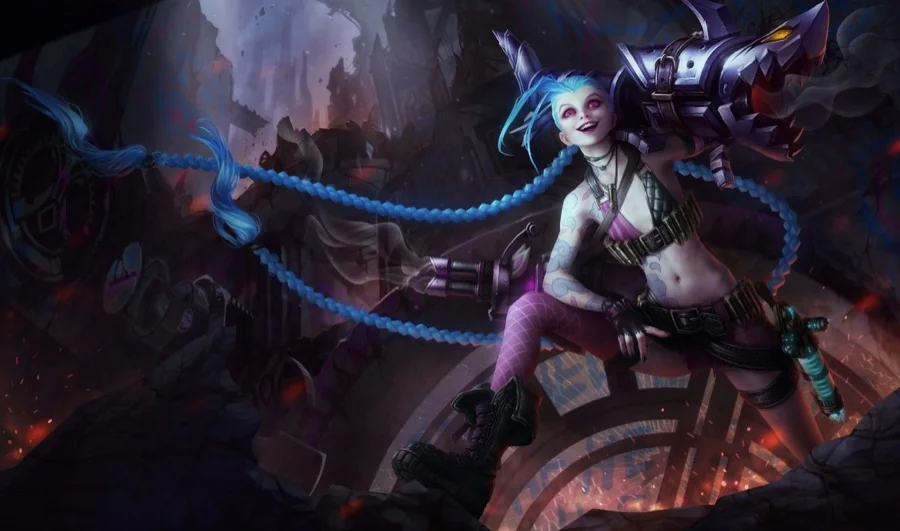
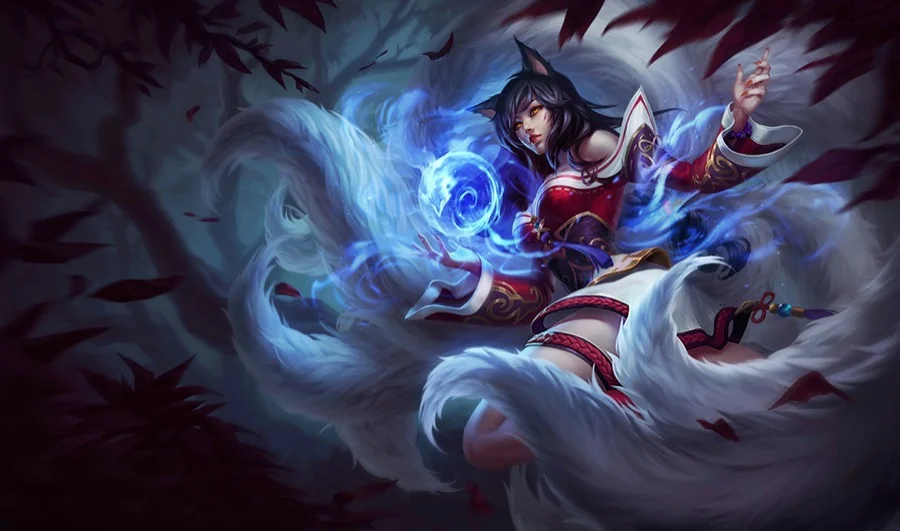
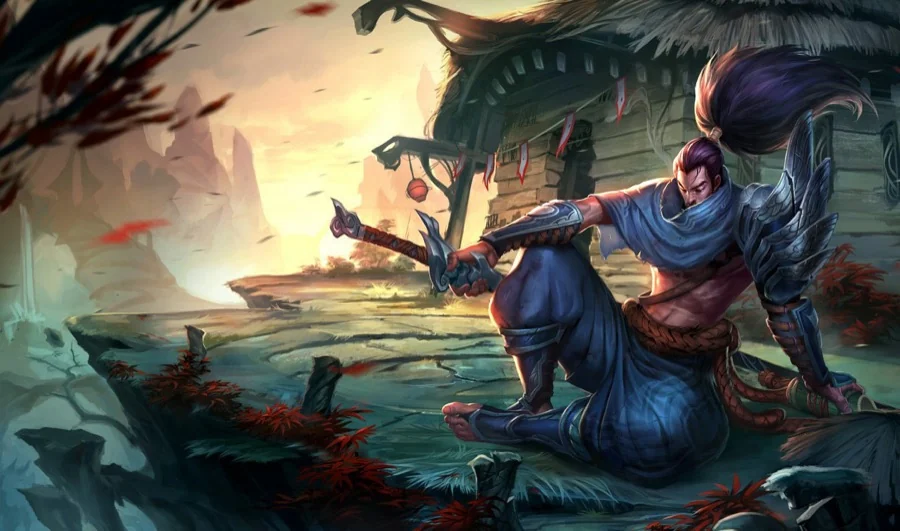
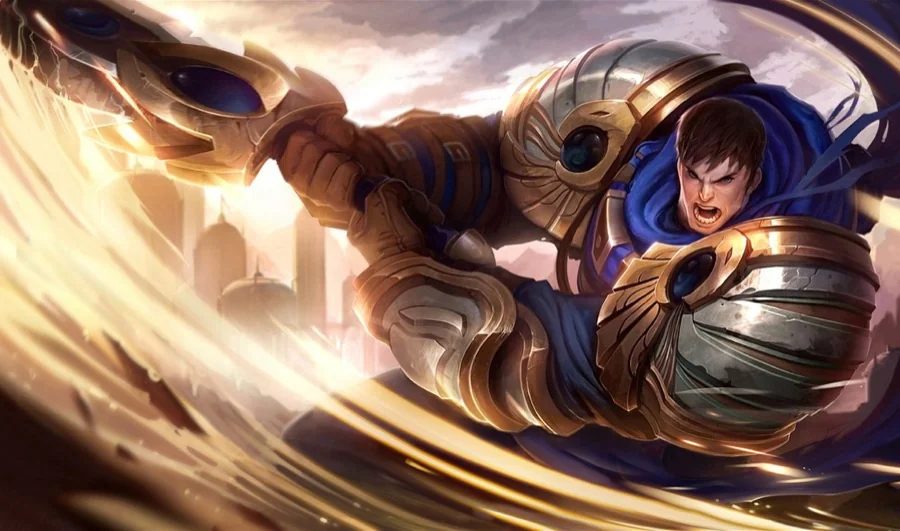
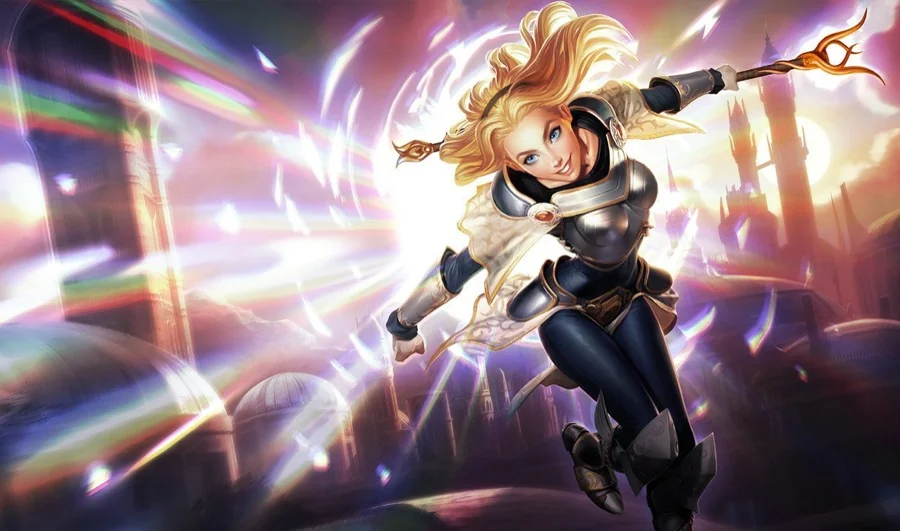
Official artwork, Riot Games. Used here for editorial commentary on the champions featured in the card game.
The map of Runeterra
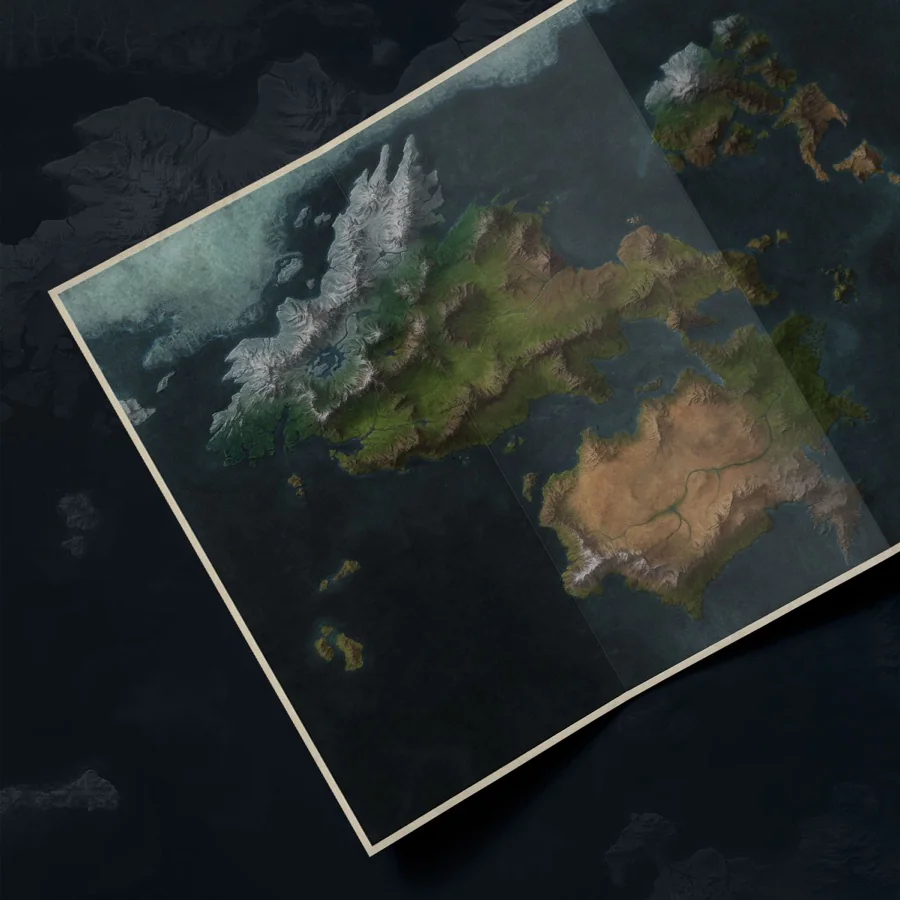
Official artwork, Riot Games, from the League of Legends Universe map site (map.leagueoflegends.com).
In the case right now
Real photos, pulled live from our shelf.
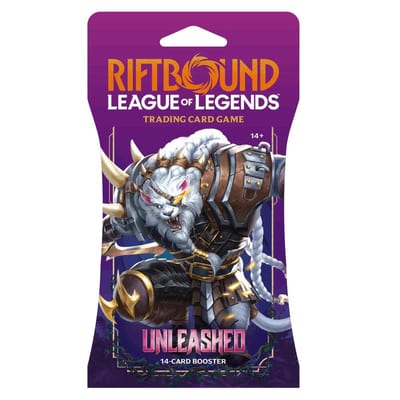
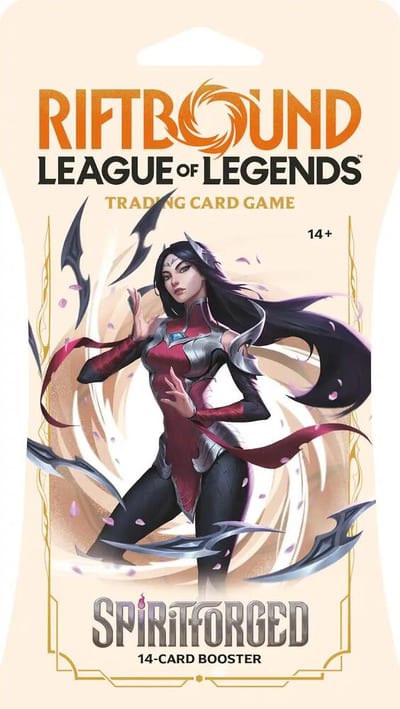
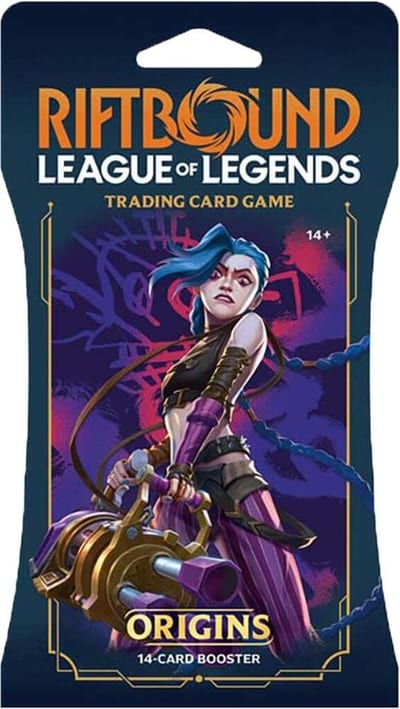
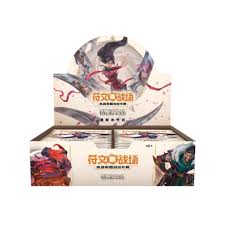
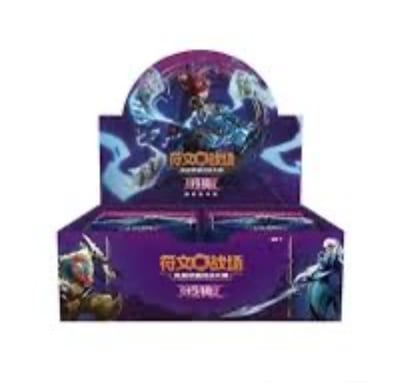
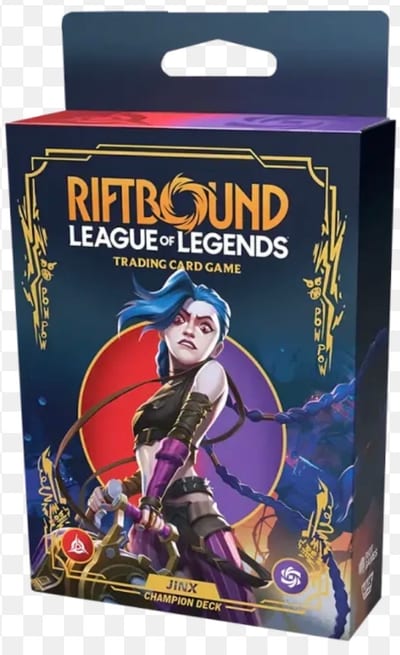
The regions, the conflicts, and why certain cards get chased
Runeterra is not one country. It is a set of regions that mostly do not get along, and the tension between them is where almost all of League's lore comes from. Riftbound's six domains map onto the same regions, so knowing the world tells you what a set is actually themed around before you open a pack.
Demacia is a proud, orderly kingdom that runs on law, duty, and a deep distrust of unchecked magic. It sees itself as the last honest kingdom in a corrupt world, which makes it rigid as much as it makes it noble. Garen is its clearest face: a soldier who believes completely in Demacia's cause. His sister Lux complicates that picture, because she is a mage in a kingdom that treats mages as a danger to be controlled, and has spent her life hiding what she can do from her own home.
Noxus sits across the map as Demacia's oldest rival, and it runs on the opposite idea. Strength decides who deserves power, not birth or bloodline. Anyone strong enough can rise in Noxus, which makes it brutal and also, in its own way, more open than the kingdom it keeps fighting. That founding belief has driven wars against nearly every neighboring region at one point or another, including a long and bloody invasion of Ionia that still shapes that region's stories today.
Ionia is closer to a loose collection of provinces than a single nation, bound together by nature magic and older spiritual traditions than open political rule. It was never built for war, which is part of why the Noxian invasion left such a deep scar on it. Yasuo carries that scar directly. He is a wandering swordsman exiled from his own home after being blamed for a killing he did not commit, hunted for years by people who once considered him family. Master Yi, a devoted swordsman of the Wuju style, and Lee Sin, a blind monk who fights as much with philosophy as with fists, both come out of that same wounded, disciplined region.
Piltover and Zaun are two cities stacked on top of each other, and the stack is the whole story. Piltover is the polished city of invention above ground, proud of its progress and its rules. Zaun is the industrial undercity below it, poorer, rougher, and left to build its own kind of progress out of chemistry and scrap. Viktor comes out of Zaun and eventually looks at both cities and decides flesh itself is the problem worth solving, which is the idea Arcane's second season builds its whole ending around. Jinx also comes out of Zaun, and unlike Viktor she is not a schemer. She is chaos with a name attached, and she is the character most responsible for pulling brand-new fans into this whole universe once Arcane hit Netflix.
Freljord is the frozen north, split between tribes that spend as much energy fighting each other as they do surviving the cold. It has no single ruler, just competing claims on what unity should even look like. Volibear belongs to an older layer of that region, a primal, half-forgotten god-like being who represents the raw, untamed Freljord that existed before any tribe tried to organize it.
Bilgewater is a lawless port town built on bounties, grudges, and whoever is strongest that day. It has no government worth the name, just captains, crews, and a code that mostly amounts to don't get caught. It is the region furthest from Demacia's order, which is very much the point.
Annie is the odd one out on this list, because her story is smaller and more personal than a regional conflict. She is a young mage with a bound fire spirit for a companion, and her power came from tragedy rather than training. Ahri, meanwhile, is one of League's oldest and most recognizable champions, a vastaya fox spirit tied to Ionia who draws life essence through charm magic and has represented the game in art and marketing since its earliest years.
That history is exactly why certain Riftbound cards get chased and others do not. A brand-new card game has no built-in fanbase of its own on day one. Riftbound skipped that problem, because it launched with a cast people already loved from the game and the show. Characters who carry weight outside the card game, like Jinx and Viktor riding Arcane's popularity, or Ahri as one of League's most enduring faces, pull collectors in who have never shuffled a deck in their life. The champions chosen for Origins' ready-to-play decks are not random either. A new game's first set is always the hardest one to build hype for cold, so Riot built it around the characters most likely to already mean something to the person opening the box. That pattern holds in every card game, not just this one. The character sells the card before the stats on it ever do.
We carry current Riftbound product in Edmond. Come see what's in the case on our Riftbound shelf.