Lore
The World of Gundam: The Story Behind the Card Game
The Gundam universe explained in plain terms. Where it started, the war that built its icons, and why some mobile suits and pilots collectors chase.
Gundam has been running since 1979. That is a long time for a story to grow, and it shows. Dozens of shows, movies, and timelines now carry the name, and most of them do not connect to each other in any direct way.
If you only know Gundam from the case in front of you, here is the story underneath it.
The short version
Gundam was created by Yoshiyuki Tomino and produced by the animation studio Sunrise, with Bandai behind the toy line from day one. The original 1979 series, "Mobile Suit Gundam," is the root of everything. Almost every other Gundam show is either a direct sequel to it or a separate universe telling a similar kind of story with new names.
The setup that started it all: humanity has moved off Earth into giant space colonies, cylindrical habitats built to house entire cities. That future is run by the Earth Federation, the government that still controls Earth itself and much of the space around it. One cluster of colonies, the Principality of Zeon, decides it wants independence and goes to war for it. That war is fought with mobile suits, the humanoid war machines the whole franchise is named after, instead of the tanks and jets you would expect from a war story.
Two characters carry that first war on their backs. Amuro Ray is a teenager who stumbles into the cockpit of an experimental Federation mobile suit called the RX-78-2, nicknamed simply "Gundam," and becomes a soldier out of necessity rather than choice. On the other side is Char Aznable, a Zeon officer piloting a customized red mobile suit who earns the nickname "the Red Comet" for how fast he moves through a battlefield. Their rivalry runs through the entire war and reappears, in one form or another, for decades of sequels.
That single conflict, the fight between the Earth Federation and Zeon, is the war that gave Gundam its shape. Almost every mobile suit, uniform, and insignia you see on Gundam merchandise traces back to it in some way, even in shows made forty years later.
The pilots and machines
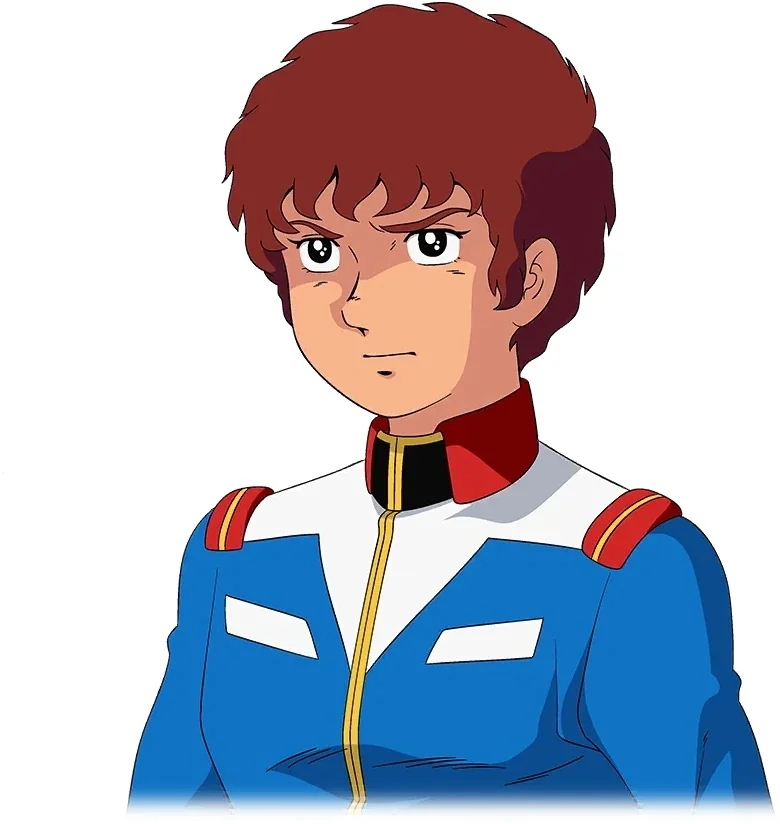
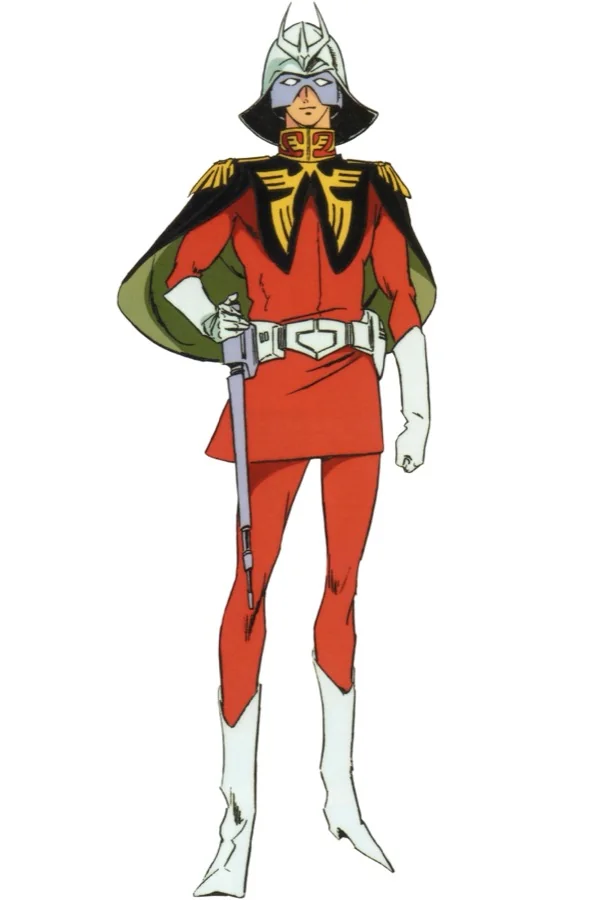
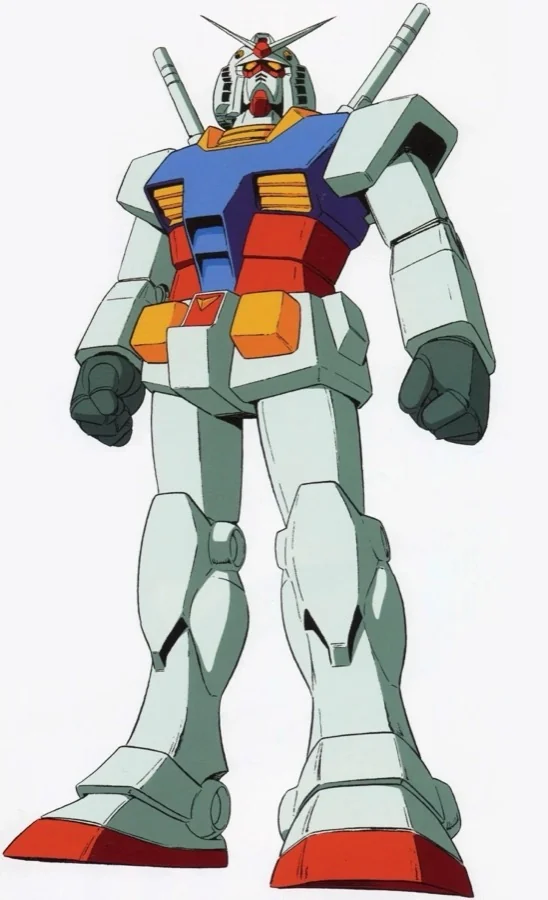
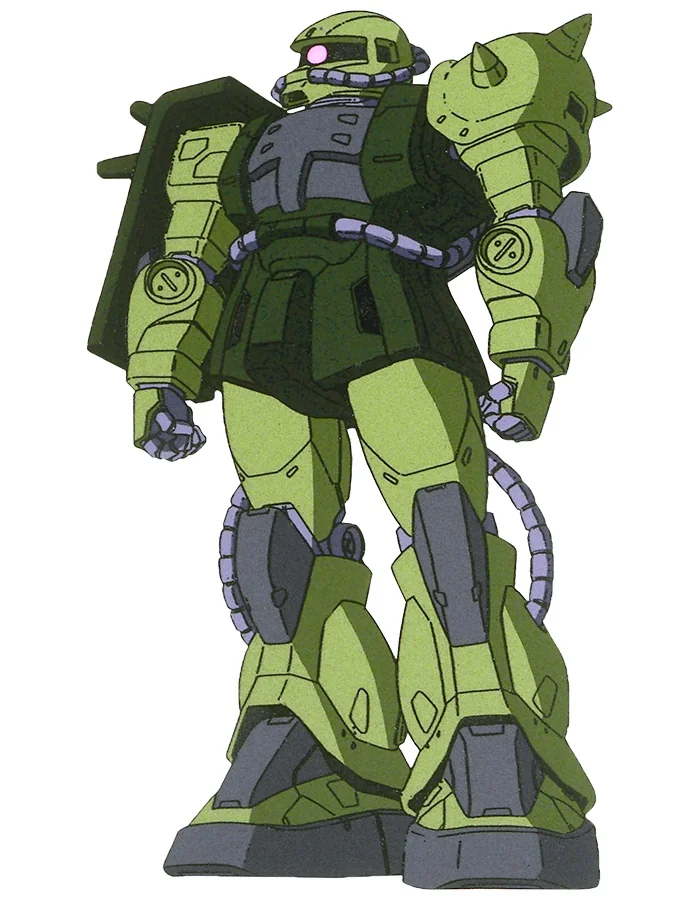
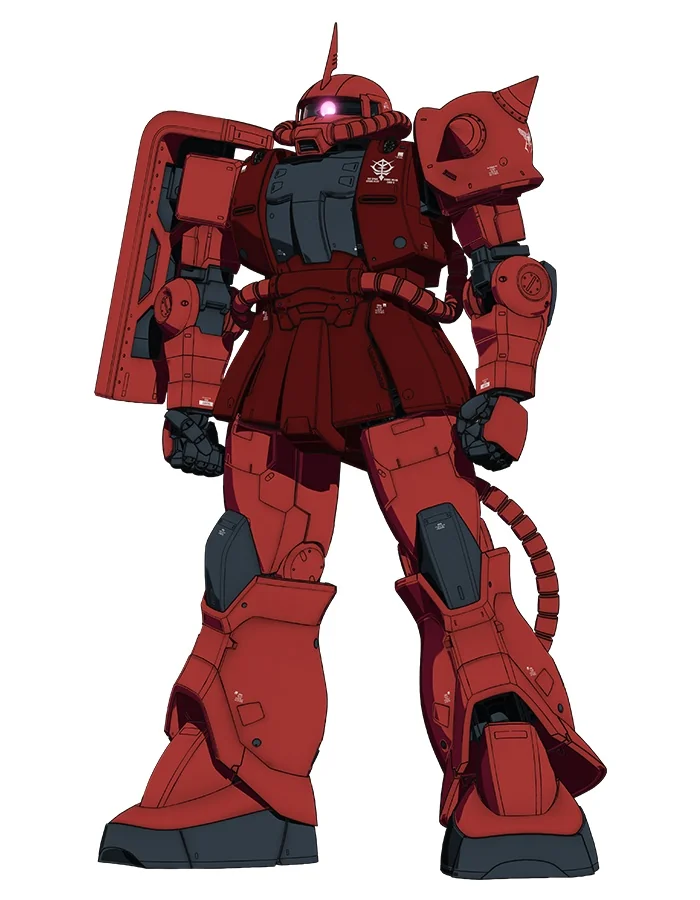
Official artwork, Sunrise / Bandai. Used here for editorial commentary on the characters and mobile suits featured in the card game.
In the case right now
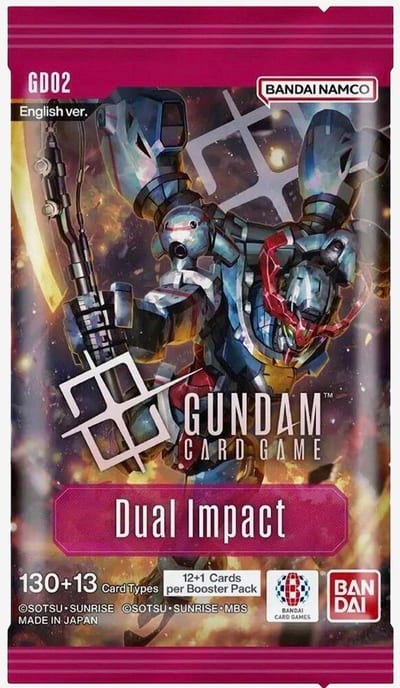
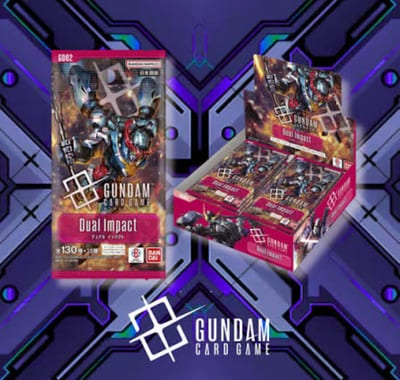
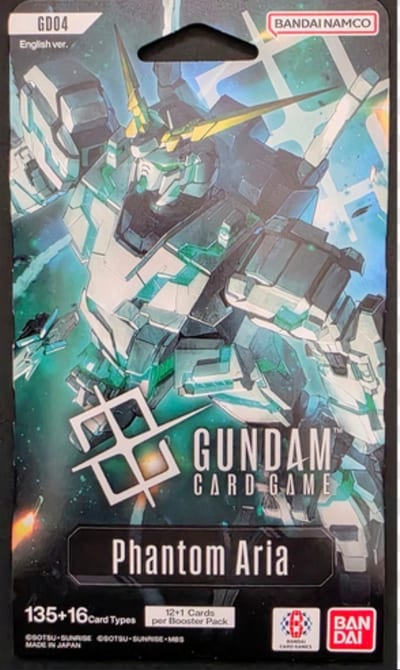
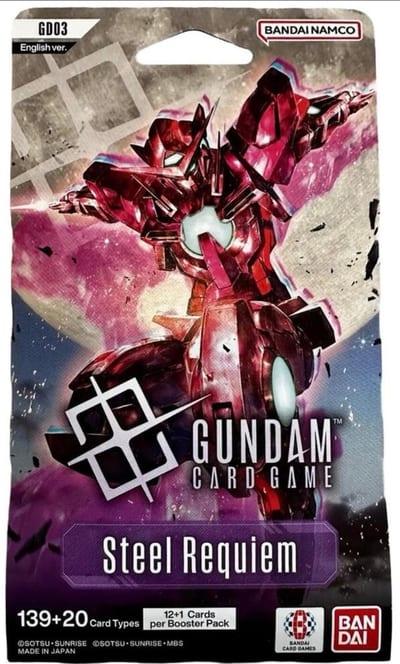
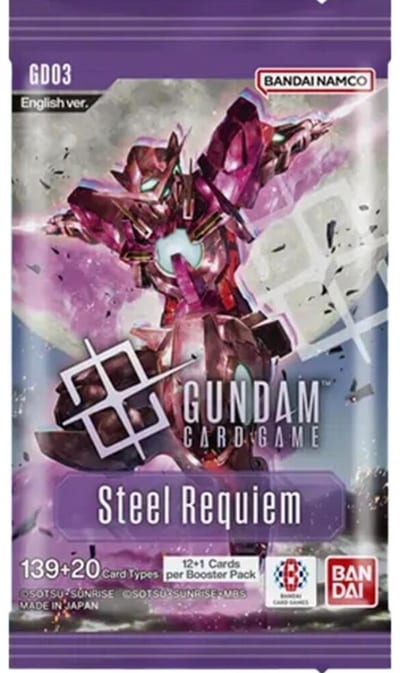
Real photos, pulled live from our shelf.
The war that never stopped mattering
The Earth Federation versus Zeon war has an official name inside the story: the One Year War. It runs from early in the year 0079 of the "Universal Century," the calendar the original timeline uses, to the start of 0080. Zeon opens the war by dropping an entire space colony onto Earth, wiping out a region and reshaping the planet's climate in one strike. That single act sets the tone for how brutal the rest of the war gets, and it is still one of the most referenced events in the whole franchise.
The Universal Century is the timeline almost everyone means when they picture "classic Gundam." It did not stop at one war. A few years later comes the conflict covered in "Zeta Gundam," where a Federation splinter group called the Titans turns openly authoritarian and gets fought by a resistance movement called the AEUG. Later still comes "Char's Counterattack," where Amuro and Char face off one final time, years older, on opposite sides of a Zeon remnant trying to drop another colony on Earth. The Universal Century keeps going well past that in books, manga, and newer anime, but those three conflicts, the One Year War most of all, are the ones nearly every collector and longtime fan can name.
Part of why the One Year War carries so much weight is timing. It is the first Gundam story, so it is where the visual language of the franchise got invented: the Federation's white-and-blue mobile suits, Zeon's single-eyed Zaku grunts, the red-versus-white color coding for an ace pilot's machine. Every later Gundam show, even ones set in a completely different universe, borrows from that vocabulary because that vocabulary is what "looks like Gundam" to an audience. The war also introduced the idea of Newtypes, people whose experience of war and space have sharpened them into something like precognitive pilots, which became one of the franchise's most reused ideas going forward.
It is worth knowing that Universal Century is not the only Gundam universe. "Gundam Wing" takes place in a separate timeline called After Colony. "Gundam SEED" happens in the Cosmic Era, with its own war and its own cast. "Gundam 00" is set in Anno Domini, a near future closer to our own calendar. "Gundam Build Fighters" is not even about war, it is about people building and battling model kits. None of these connect to the Universal Century story in any official way. They are closer to separate book series sharing one publisher than chapters of one saga. If you hear two fans arguing about "the real Gundam," this is usually why.
For a card shop, the practical version of all this history is simple. Cards, sealed boxes, and collectibles built around a franchise usually track the same things fans already care about in the show. A mobile suit or pilot that carries real weight in the story, the ones tied to a defining war, a famous rivalry, or a genuinely new idea like Newtypes, tends to get chased harder than a background character from a side arc nobody remembers. The RX-78-2 and Char's mobile suits show up disproportionately often because the One Year War is disproportionately important to the franchise's identity. That is not a coincidence, and it is not unique to Gundam. The same pattern shows up in Pokemon, One Piece, and every other franchise with decades of material behind it: the earliest, most iconic era usually pulls the most attention, and everything after it gets measured against it.
That is also why knowing the lore actually helps you shop. A set built around the One Year War or its two leads is drawing on the most recognized chapter of the franchise. A set built around a side character from a lesser-known era is a different kind of pull, more of a deep-cut for someone who already knows the story. Neither is wrong to collect. It just helps to know which one you are holding.
We carry Gundam alongside Pokemon, One Piece, Magic, and the rest of our card games. Come look at what is in the case on our Gundam shelf.
FAQ
Who created Gundam?
Yoshiyuki Tomino created the original 1979 series. Sunrise produced the animation, and Bandai has handled the toy and model line since the start.
What is the Universal Century?
It is the original Gundam timeline and the calendar the story uses in place of our own. Most of what people call "classic Gundam," including the One Year War, Zeta Gundam, and Char's Counterattack, happens inside it.
What was the One Year War?
The founding conflict of the franchise. The Principality of Zeon fought the Earth Federation for independence from 0079 to 0080 in the Universal Century, and it introduced the core cast and mobile suits the rest of the franchise still references.
Are all Gundam shows connected?
No. Only shows set in the Universal Century connect to the original story. Series like Gundam Wing, Gundam SEED, and Gundam 00 are separate universes with their own timelines and casts.
Does Relic carry Gundam cards?
Yes. Gundam is one of the card games we carry and buy at the counter, alongside Pokemon, Magic, One Piece, Yu-Gi-Oh, Lorcana, Naruto, and Riftbound.
We buy, sell, and trade cards in Oklahoma City. Every card here is in our case.