Lore
The Multiverse of Magic: The Gathering, Explained
A plain-English guide to Magic: The Gathering's multiverse, its Planeswalkers, and the planes and storylines collectors keep running into.
Magic: The Gathering has been telling one long story since 1993. Wizards of the Coast, a Hasbro company, has spent three decades building a fictional universe underneath the cards. Most players never dig into it. Most collectors end up learning pieces of it anyway, because the lore is why certain cards get chased in the first place.
Here is the plain version, then the deeper version.
The short version
Magic's story runs on one idea. There is not one world. There are countless worlds, called planes, scattered across something the game calls the multiverse. Each plane has its own geography, its own history, its own flavor of magic. Some are medieval. Some are gothic horror. Some are steampunk. Some are ancient Greek myth. Some are giant cities that never end.
Most people can never leave their own plane. A rare few can. They are called Planeswalkers, and the thing that lets them do it is called a spark. A spark can appear in anyone, usually in a moment of extreme stress, and once it ignites, that person can step out of their home world and into any other. Planeswalkers are the main characters of Magic's story, and most of the humanoid card art you see with a name and a personality is one of them.
The five mana colors are not just a way to build a deck. They are a philosophy of magic tied to the fiction. White stands for order and community. Blue stands for knowledge and control. Black stands for ambition and power at any cost. Red stands for freedom and raw emotion. Green stands for growth and the natural order. Wizards calls this the color pie, and it shapes how every character in the story thinks and fights, not just what a card does in a game.
Collectors run into a handful of names constantly. Jace Beleren, a blue mind-mage who spends most of his story missing pieces of his own memory. Chandra Nalaar, a red pyromancer who burns first and thinks later. Gideon Jura, a white soldier who can turn his body invulnerable. Nicol Bolas, an ancient dragon and the story's longest-running villain. And a handful of planes come up over and over: Dominaria, the oldest and most fought-over world; Innistrad, a plane built entirely out of gothic horror; and Ravnica, a single city-world split into ten rival guilds.
That is enough to follow along at the counter. The rest is where it gets good.
The planeswalkers
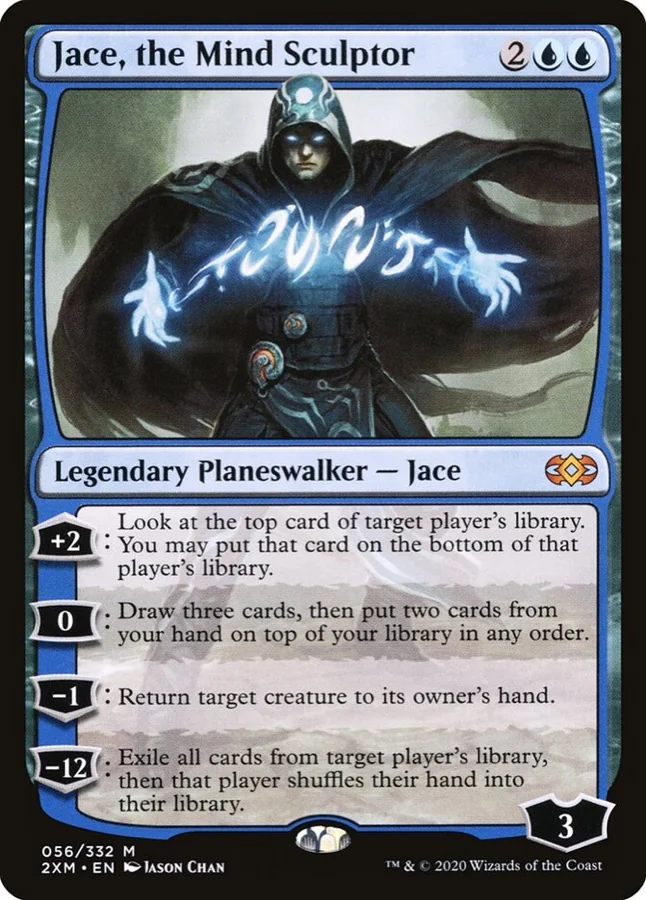
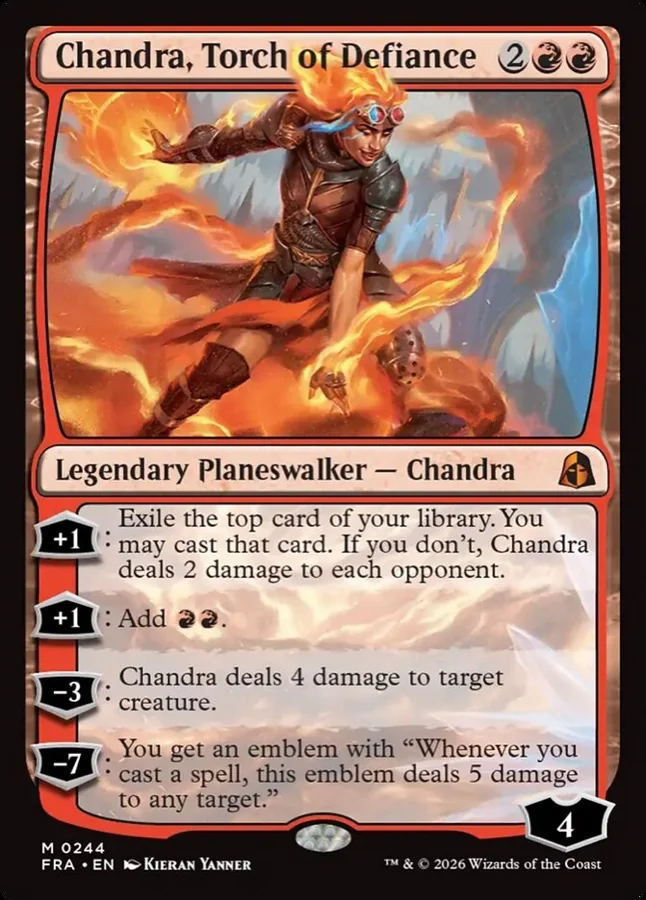
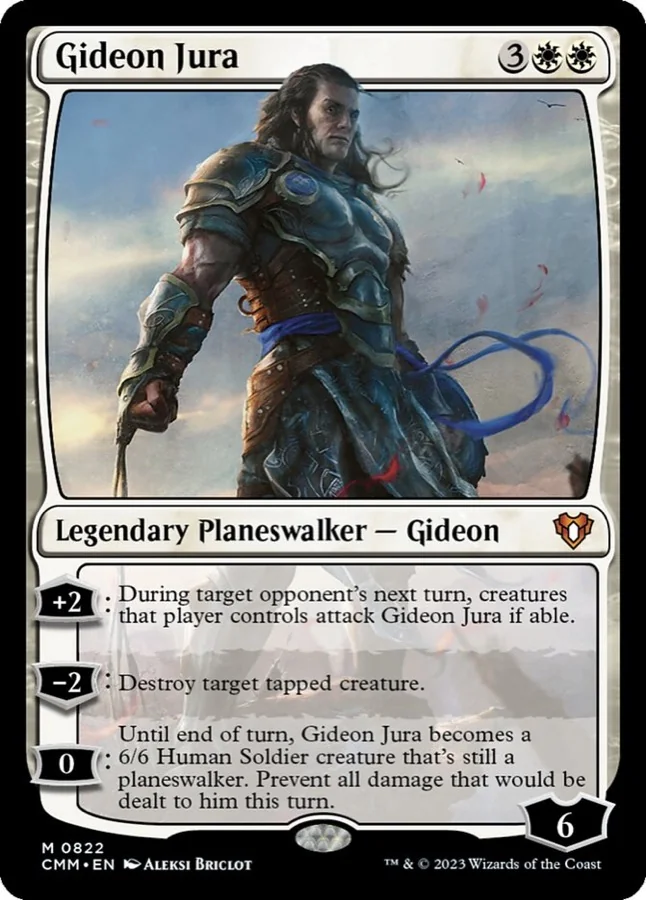
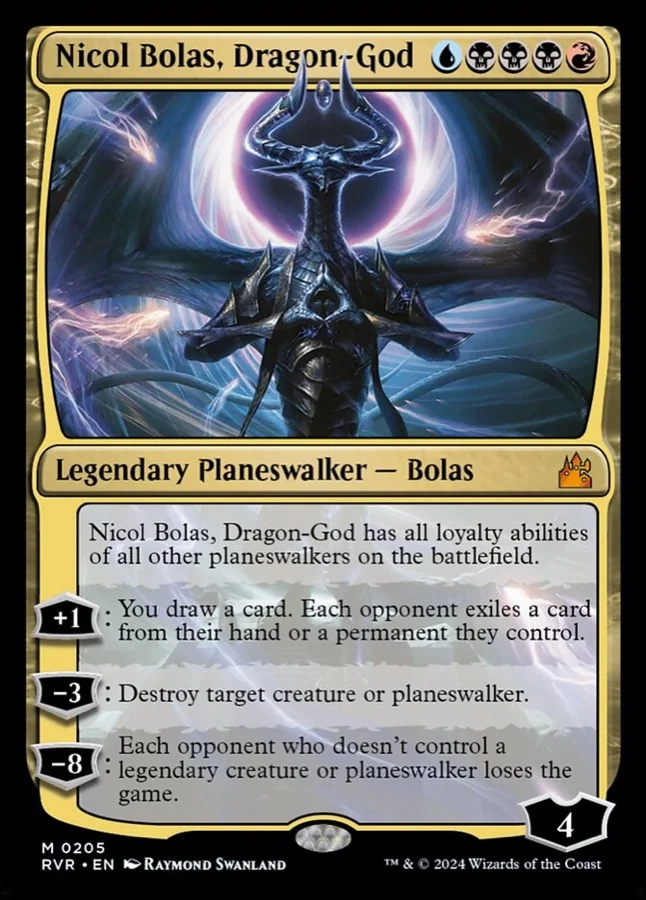
Official artwork, Wizards of the Coast. Used here for editorial commentary on the characters featured in the trading card game.
The multiverse
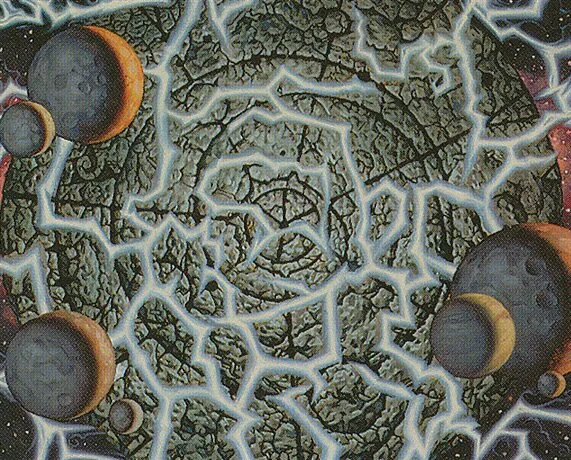
Official artwork, Wizards of the Coast, from the card Time Spiral. Used here for editorial commentary on the multiverse concept central to the game's lore.
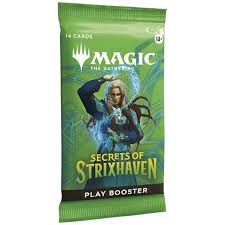
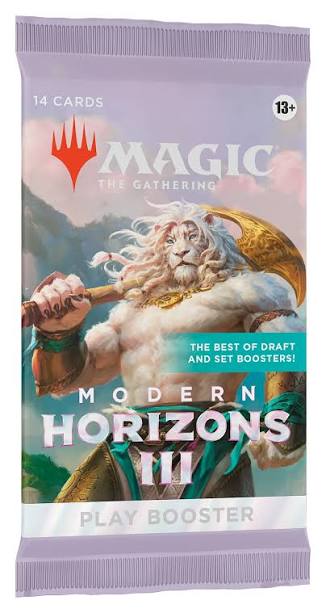
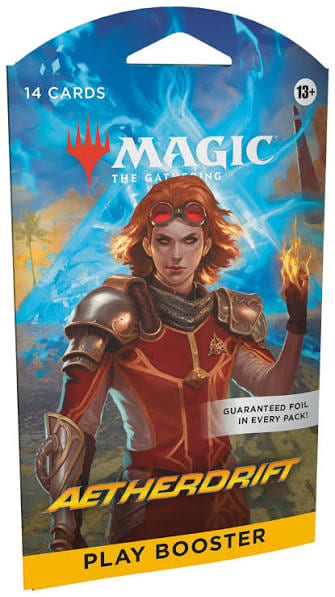
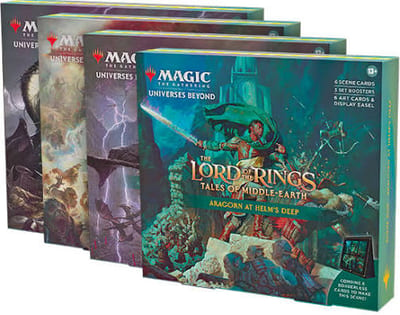
In the case right now
Real photos, pulled live from our shelf.


The deeper version, for anyone who wants it
Magic's story did not arrive all at once. It grew set by set, and the early chapters all point back to one plane: Dominaria. The founding conflict is the Brothers' War, a fight between two genius artificers, Urza and Mishra, who were siblings before they were enemies. Their war escalated so far that it ended with a weapon called the Sylex, which scarred Dominaria's geography for the rest of the story. Urza survived. He spent the following centuries as a nearly immortal planeswalker obsessed with one goal: stopping a threat he had glimpsed on another plane entirely.
That threat was Phyrexia. A scientist named Yawgmoth had turned a hidden plane into a laboratory for grafting flesh to machine, building an army of oil-blooded, part-mechanical horrors loyal only to him. Urza spent generations preparing Dominaria to survive a Phyrexian invasion, recruiting artifacts, allies, and eventually the crew of a flying ship called the Weatherlight. That multi-year arc, told across sets from Weatherlight through Apocalypse, is usually called the Weatherlight Saga. It ended with the first full-scale Phyrexian invasion of Dominaria and Yawgmoth's defeat, at a cost that included Urza himself.
Phyrexia did not stay dead. Decades of story later, a second, quieter invasion took root on the plane of Mirrodin, a world built of living metal, and slowly converted it into New Phyrexia. That set up a second reckoning, culminating in the March of the Machine storyline, where Phyrexia stopped invading one world at a time and instead launched an assault on the entire multiverse at once. Nearly every plane collectors know from other sets got pulled into that fight.
In between those two Phyrexian eras sits the story's other major turning point: War of the Spark. Nicol Bolas, the ancient dragon planeswalker, spent centuries manipulating events across the multiverse for one purpose, hunting down other planeswalkers' sparks to fuel his own ascension into godhood. He lured nearly every surviving planeswalker to Ravnica and sprang his trap there. The battle cost real, named characters their lives, including Gideon Jura, and ended with Bolas stripped of his power. It is the closest thing Magic has to a finale for its first three decades of characters, which is exactly why War of the Spark cards carry weight with collectors who followed the story.
Beyond the multiverse-spanning wars, most of what makes Magic's setting fun is how different each plane feels. Innistrad is deliberately built like a horror movie, full of vampires, werewolves, and hunted villagers, and Wizards has returned to it more than once because players love it. Ravnica flips the usual fantasy format entirely: instead of kingdoms, it is one endless city split among ten guilds, each built around a two-color philosophy and a distinct culture. Theros draws directly on Greek mythology, gods included. Kamigawa is built on Japanese folklore and, in its more recent era, cyberpunk contrast between spirits and machines. Zendikar is a plane of constant natural disaster, designed around adventure and exploration. Kaladesh is inventors and steampunk. Ixalan is pirates, dinosaurs, and lost cities. Each of these settings became its own block of cards, and each pulls in players who are drawn to that specific flavor as much as the mechanics.
This is also where the lore and the shop counter meet. Sets tied to a character's death, a turning point in the story, or a plane's first appearance tend to hold collector interest longer than a set with no story attached, because the cards double as a piece of a narrative people actually followed. War of the Spark, the original Innistrad block, and anything featuring Nicol Bolas or the core Weatherlight crew get asked about here for that reason. It is not only about which cards are strong to play. It is about which cards mark a moment in a story that has been running for over thirty years.
We carry Magic singles and sealed product in Oklahoma City, and what is in our case is what is actually in stock. Come see the Magic shelf or ask us at the counter which era a card you are holding comes from.