Strategy
When to Attack vs Set Up in the Pokemon TCG
A counter-side look at the Pokemon TCG’s real tempo choice: hit now, or spend the turn building the board. Original shop writing, tied to sets and cards we actually stock in Edmond.
Most new players treat every turn the same. Draw. Slap an Energy on whatever is in front. Attack if the number on the card lets them.
That is how you lose to a quiet board.
The Pokemon TCG is a prize race, not a damage contest. You win by taking the last Prize card, usually six. Some knockouts are worth two Prizes because the Pokemon is an ex, a V, or another rule-box attacker. The person who points at the biggest attack on the card is not always the person who is actually ahead.
The real choice, almost every turn after the first, is this: do I spend this turn making my board better, or do I spend it taking a Prize?
What “set up” actually means
Setting up is not stalling. It is buying a future turn that hits harder, safer, or more than once.
In this game, a setup turn usually does one or more of these:
- Puts a second or third Pokemon on the Bench so you are not one knockout from a dead board
- Evolves a Basic into the Pokemon you actually wanted to attack with
- Attaches the Energy that attacker needs, including the extra one that makes the second attack live next turn
- Uses a Supporter that draws, searches, or moves Energy, instead of a Supporter that only hurts the opponent this turn
- Retreats a weak Active Pokemon before the opponent knocks it out for a cheap Prize
Energy is the slowest part. You attach one from your hand per turn unless a card says otherwise. That is why a 3-Energy attack is a two-turn project even when the Pokemon is already in play. If you fire a cheap attack this turn, you might still be one Energy short of the attack that actually wins the prize race.
Going first and going second is the first version of this choice. In the current rules, the player who goes first does not attack on their first turn. That is not a punishment. It is the game telling you to set up. The player who goes second gets the first swing, but they also face a board that already had a turn to grow. Neither seat is “the attack seat.” Both seats are tempo seats.
When you should attack
Attack when the attack does work that a setup turn cannot undo.
Knock out the Active Pokemon if that Prize (or two) puts you on a number the opponent cannot catch. A 2-Prize knockout on an ex is not the same as chipping 30 damage onto a Basic. Count Prizes out loud. If you are taking Prize 5 and 6 off one hit, you take it even if your Bench looks ugly.
Attack when the opponent’s Active Pokemon is a setup piece, not a closer. A freshly played Basic with no Energy is a gift. Leaving it alive for a turn often means it evolves, attaches, and hits you for a knockout you did not have to allow.
Attack when your own Active Pokemon is about to get knocked out anyway. A Pokemon with 10 HP left that can still swing is not a tank. It is a Prize you are donating unless it takes something with it. Use the attack. Then, on the next turn, promote whatever you actually built on the Bench.
Attack when you need to force the opponent off their script. Some cards only work if they get a quiet turn: a Stage 2 line, a Rule Box attacker that needs two Energy and a Tool, a Bench that wants to stay hidden. Damage on the Active Pokemon is a clock. A clock makes them retreat, gust, or panic-attach, and those are resources they wanted to spend on their own setup.
When you should not attack
Do not attack just because the attack box is legal.
Skip the attack if it spends Energy you need on the real attacker. Moving Energy is not free in most decks. Attaching to a Bench sitter so it can “do something” this turn is how people strand the Energy that belonged on Charizard, Greninja, or Gardevoir two turns from now.
Skip the attack if the damage does not threaten a knockout and does not change what the opponent can do. Thirty damage on a 280 HP ex is graffiti. The opponent will heal, retreat, or ignore it. You just spent a turn that could have drawn you the Evolution or the Stadium you actually needed.
Skip the attack if you have one Pokemon in play. A knockout into an empty Bench is how games end on the spot. Play the Basic. Then attack, if you still can.
Skip the attack if you are holding a better Supporter and the rules only let you play one. Professor’s Research, Iono, a search card that finds the Evolution — those cards are setup. Using a thin attack so you can say you attacked, then ending the turn with five cards in hand, is a beginner tell.
Skip the attack going into a board that will 2-Prize you back immediately, unless you are also taking the last Prizes. Trading your 2-Prize attacker for their 1-Prize Basic is how you fall behind while “winning” the exchange.
A simple turn checklist
Ask these in order. Stop when one of them is a yes.
- 1. If I do not play a Pokemon this turn, do I die to a single knockout?
- 2. If I attach Energy to the Active Pokemon, am I still one attach away from the attack I actually wanted?
- 3. If I attack, do I take a Prize, or only leave a number?
- 4. If I take that Prize, how many does the opponent take on the reply?
- 5. If I skip the attack, what does this turn buy me that next turn cannot?
If (1) is yes, you set up, even if the attack was ready. If (3) is a Prize and (4) does not put them on match point, you attack. If (3) is a number and (5) is “I find my Stage 2 / second Energy / second attacker,” you set up.
That is the whole skill. The cards change every season. The checklist does not.
How this shows up in the cards people actually chase
Collectors already vote on this with their wallets, even when they are not playing.
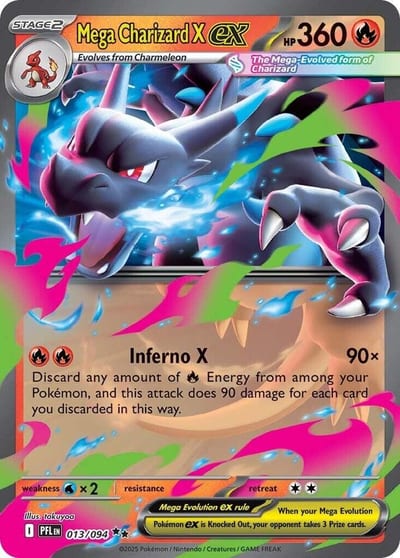
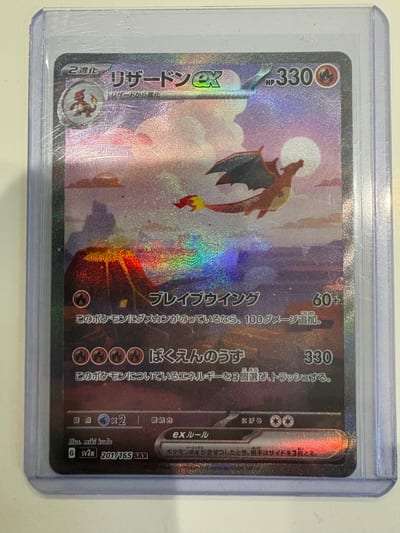
The 151 Charizard ex is a closer. People hunt it because the character is the closer in their head, and because a big Fire attacker with a Rule Box is what a prize race looks like on cardboard. The Mega Charizard X ex from Phantasmal Flames is the same idea in the current Mega Evolution rules: you are building toward a swing, not toward a 30-damage poke.
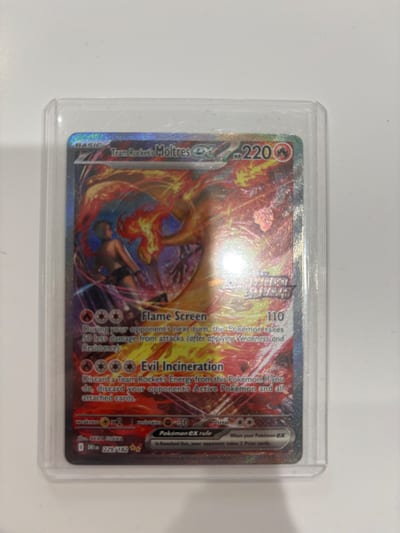
Destined Rivals, and the Team Rocket cards that came with it, pull the other way. Rocket attackers want to interrupt. A Moltres ex that pressures the Active Pokemon is a “hit now” card. Giovanni and the rest of that set’s Trainer line are setup and disruption mixed together — which is why players pull them and why they sit in a case next to the pretty full arts.
Prismatic Evolutions is a setup set wearing an Eevee costume. Flareon, Leafeon, Glaceon, Jolteon, Umbreon, Sylveon: every one of those lines is a two-step (sometimes three-step) build. The chase cards are the finished forms. The gameplay lesson is the same as the collector lesson. You do not win the turn you play Eevee. You win the turn the Evolution hits the board with Energy already on it.
Older cards tell the same story in a slower font. Base Set Chansey was never a closer. It was a wall you hid behind while the rest of the board came online. Base Set Pikachu was the opposite instinct: cheap, famous, and not the thing that took six Prizes by itself. A Pikachu VMAX from Sword & Shield is the modern version of that tension — a card people want to look at, and a card that still needs a turn of Energy before it is a real attacker.
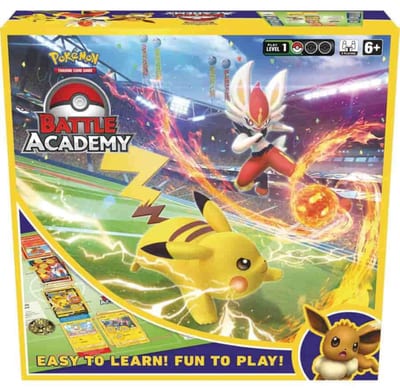
Battle Academy exists because this choice is not obvious. It is a learn-to-play box. If you are teaching someone at the kitchen table, the first habit to break is “I attached Energy, so I have to attack.”
In the case right now
Real photos from the Edmond case. Stock moves. If a card is gone, it is gone.
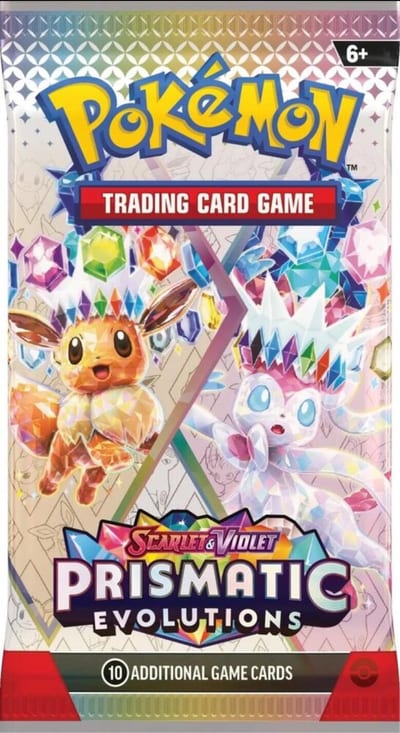
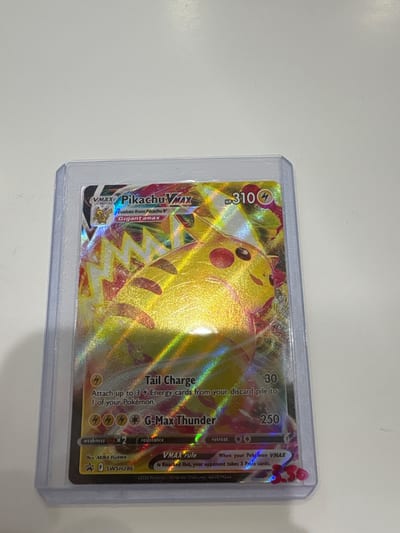
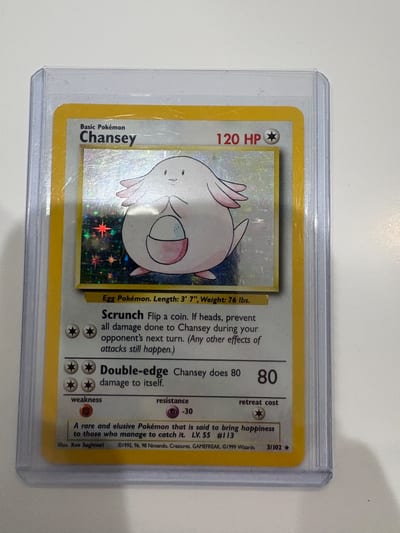
Walk in and look at the cards in person if you want to build around them. We are at 341 NE 139th St, Suite 22, Edmond. Monday–Friday noon–6, Saturday–Sunday 10–6. (405) 546-2480. No appointment.
The Pokemon shelf is the live count. Sealed product from 151, Destined Rivals, Phantasmal Flames, Prismatic Evolutions, and Mega Evolutions shows up there when we have it. Singles do too. If you want to play, buy the cards you will actually attach Energy to. If you want to collect, buy the ones you keep thinking about after you leave.
FAQ
Can I attack on my first turn in the Pokemon TCG?
If you went first, no — current rules block the first player’s first-turn attack so that turn is for setup. If you went second, you can attack that turn if your Active Pokemon has the Energy the attack requires. Either way, “can I” is not the same as “should I.”
What does setting up mean in Pokemon TCG?
It means spending the turn on the board you want next turn: Bench Pokemon, Evolutions, Energy, drawing, and retreating a weak Active. It is not passing. It is building the knockout you cannot afford this turn.
Should I always knock out the opponent’s Active Pokemon?
No. Take the knockout when the Prize math is good and you will not immediately donate a bigger Prize back. Leave it if the hit is chip damage, if you have one Pokemon in play, or if the Energy belongs on a different attacker.
Why do ex and V Pokemon change the attack-or-setup choice?
They are usually worth two Prize cards. Hitting one is a bigger swing. Putting your own on the Active spot too early is a bigger risk. Setup matters more when the knockout is worth two, because a sloppy trade ends the prize race twice as fast.
Do I need a competitive deck to practice this?
No. A Battle Academy box, a handful of Evolutions, and a stack of Energy is enough. Practice counting Prizes and counting Energy. The habit transfers to Destined Rivals, 151, Prismatic Evolutions, and whatever Mega attacker you pull next.